Kashmir’s Ancient Architectural Marvels: Martand Sun Temple, Naranag & Avantiswami Ruins
Few destinations blend jaw‑dropping natural beauty with centuries‑old heritage like Kashmir. Beyond the famous lakes and gardens lie some of the Himalayas’ most evocative temple ruins – places where legend, architecture and adventure intersect. In this guide we’ll take you through three of the valley’s ancient marvels: the Martand Sun Temple, the Naranag (Wangath) temple complex and the Avantiswami Temple at Awantipora. Whether you’re planning a family holiday, searching for offbeat experiences for your clients or just itching to explore India’s forgotten history, these sites offer a perfect mix of culture, photo‑worthy scenery and outdoor fun.
Martand Sun Temple – Where the Sun Once Shone Brightest
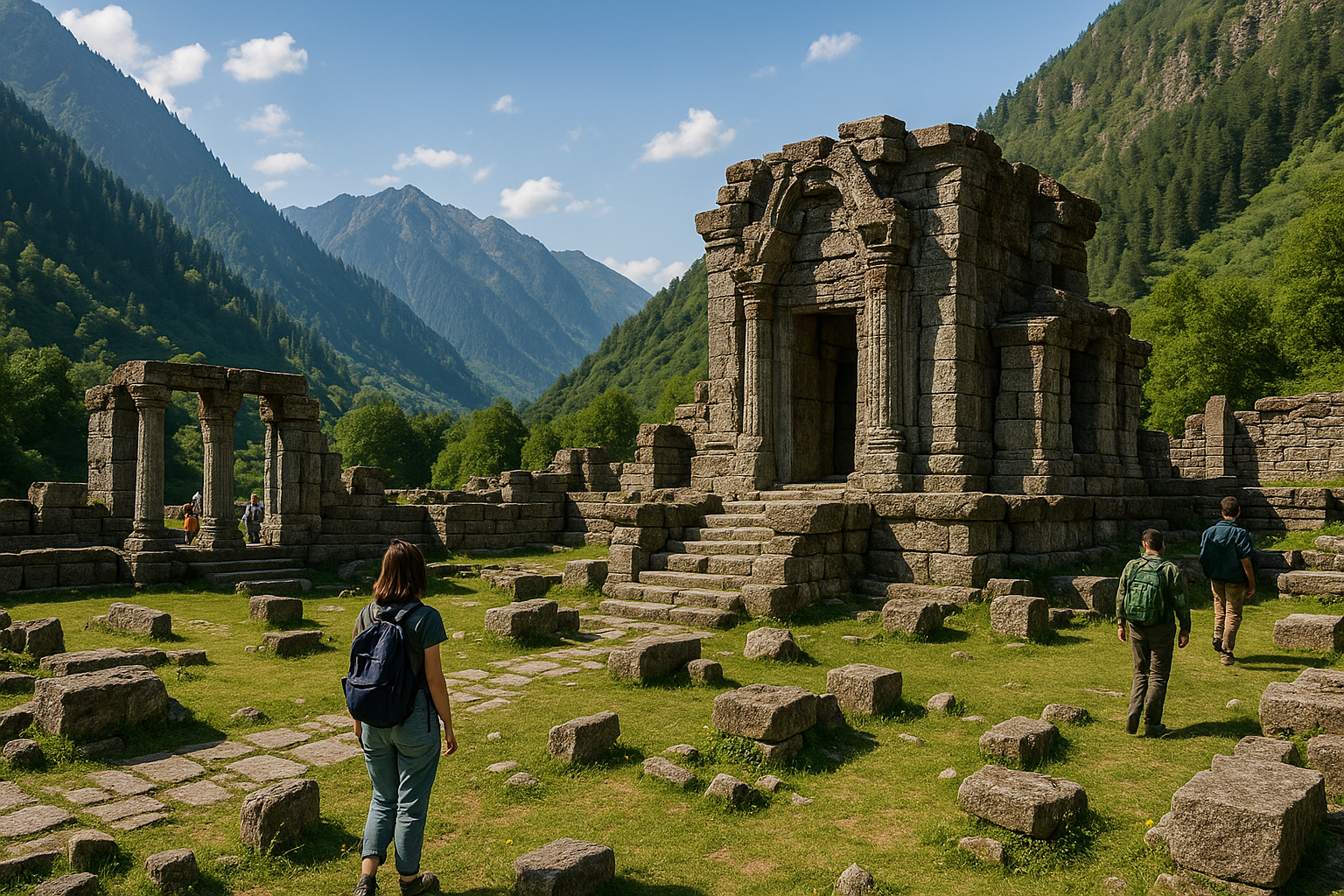
High on a plateau above Mattan village in Anantnag district lie the majestic ruins of the Martand Sun Temple. Commissioned by King Lalitaditya Muktapida of the Karkota dynasty in the 8th century, this was once one of the largest Sun temples in the subcontinent. The complex’s design blends Gandharan, Gupta and even Byzantine influences: a huge colonnaded courtyard surrounded by 84 smaller shrines leads to the central sanctum which likely had a towering pyramidal roof. From the ruins you’ll enjoy sweeping views over the entire Kashmir Valley – no wonder ancient worshippers felt close to the Sun here!
Travel tips:
- Getting there: Martand is about 10 km from Anantnag and roughly 60 km south of Srinagar. Hire a taxi or include it as a stop on your way to Pahalgam.
- Best time: Spring (March–May) and autumn (September–November) offer clear skies and moderate temperatures. Sunrise and late afternoon light are magical for photographs.
- What to do: Stroll around the 84 shrines, examine the carvings of Vishnu and river goddesses and let kids play a game of “ancient explorer.” Combine your visit with nearby Mattan springs or the saffron fields of Pampore.
Naranag (Wangath) Temple Complex – Gateway to the Himalayas
Tucked along the Sind Valley near the village of Naranag lies a group of mysterious granite temples. According to Kalhana’s Rajatarangini, a holy spring existed here as far back as 220 BCE; later, King Lalitaditya Muktapida built a Shaivite temple complex in the 8th century. Today these ruins comprise two clusters of shrines enclosed within stone walls. The first group is anchored by a 25‑ft square main shrine, while the second sits across the Kanaknai (Kanka nadi) stream. Many trekkers know Naranag as the starting point for hikes to Gangabal and the Kashmir Great Lakes, but few explore the temples themselves.
Travel tips:
- Getting there: Naranag is about 50 km northeast of Srinagar via Ganderbal. The road winds through pine forests and mountain streams – a scenic drive the whole family will love.
- What to do: Wander among the moss‑covered stones, then walk down to the crystal‑clear Naranag spring. Adventure seekers can trek onwards to the alpine lakes of Gangabal and Nundkol; travel agents can offer combined temple–trekking packages.
- Nearby: On your way back stop at Kangan for hot rajma‑rice and Kehwa or visit the local handicraft shops selling papier‑mâché souvenirs.
Avantiswami Temple – A Vishnu Shrine Frozen in Time
On the main Srinagar‑Pahalgam highway in Awantipora stand the atmospheric remains of the Avantiswami Temple. Built around 855 AD by King Avantivarman, founder of the Utpala dynasty, the complex once followed the Panchayatana style of architecture with a central shrine to Lord Vishnu and four subsidiary shrines at the corners. Only broken columns, sculpted walls and a raised plinth survive today, yet they speak of a glorious era. Over the centuries invasions and natural decay led to its abandonment; the ruins are now protected by the Archaeological Survey of India.
Travel tips:
- Location & access: Awantipora lies about 30 km from Srinagar. You can easily visit on a day trip to Pahalgam or include it on a multi‑day itinerary covering Aru Valley and Lidder Valley.
- Timings & fees: The temple is open from 8 am to 5 pm. Indians pay around ₹20 while foreigners pay ₹200, and children under 15 enter free.
- Experience: Allow at least an hour to wander through the pillars and study the carvings of gods, dancers and elephants. Bring water and wear comfortable shoes – uneven stones add to the adventure!
Beyond the Temples: Culture, Cuisine & Family‑Friendly Fun
Kashmir isn’t just about architecture – it’s also a feast for the senses. After visiting these ancient sites:
- Savour local cuisine: Try the Wazwan platter featuring Rogan Josh, Yakhni, rista and gushtaba. Families can order milder dishes like paneer chaman and dum aloo. Wash it all down with fragrant Kashmiri Kahwa tea.
- Explore markets: Near Anantnag and Srinagar you’ll find bustling bazaars selling pashmina shawls, hand‑knotted carpets and papier‑mâché art. These make thoughtful souvenirs and support local artisans.
- Enjoy outdoor adventures: Combine temple visits with a shikara ride on Dal Lake, a pony ride in Pahalgam or a picnic in the meadows of Yusmarg. Travel agents can bundle these experiences into bespoke packages for families and adventure seekers.
Plan Your Heritage Journey with Travel Execute
Ready to step back in time and uncover Kashmir’s hidden marvels? At Travel Execute we craft customized itineraries that blend history, culture and adventure. Whether you’re a solo traveler, a family, an adventure junkie or a tour operator designing packages for clients, our team on the ground will ensure your trip is seamless and memorable.
📞 WhatsApp us: [ +91 9541955509 ] for instant queries and package bookings (click the green button below to start a chat)
💏 Email: info@travelexecute.com
📍 Location: Srinagar, Kashmir
Embark on an unforgettable journey through Kashmir’s temples and landscapes. The stories carved in these stones and the memories you’ll make will stay with you long after you leave!

All Categories
Recent Posts
Glamping in Kashmir: Luxury Tents & Boutique Camps for Families, Agents & Adventurers
Discover Turtuk: Kashmir’s Hidden Frontier Village in Nubra Valley